How to Plan a Full Car Build Step by Step
ModDrip Team · 2026-08-06 · 4 min read
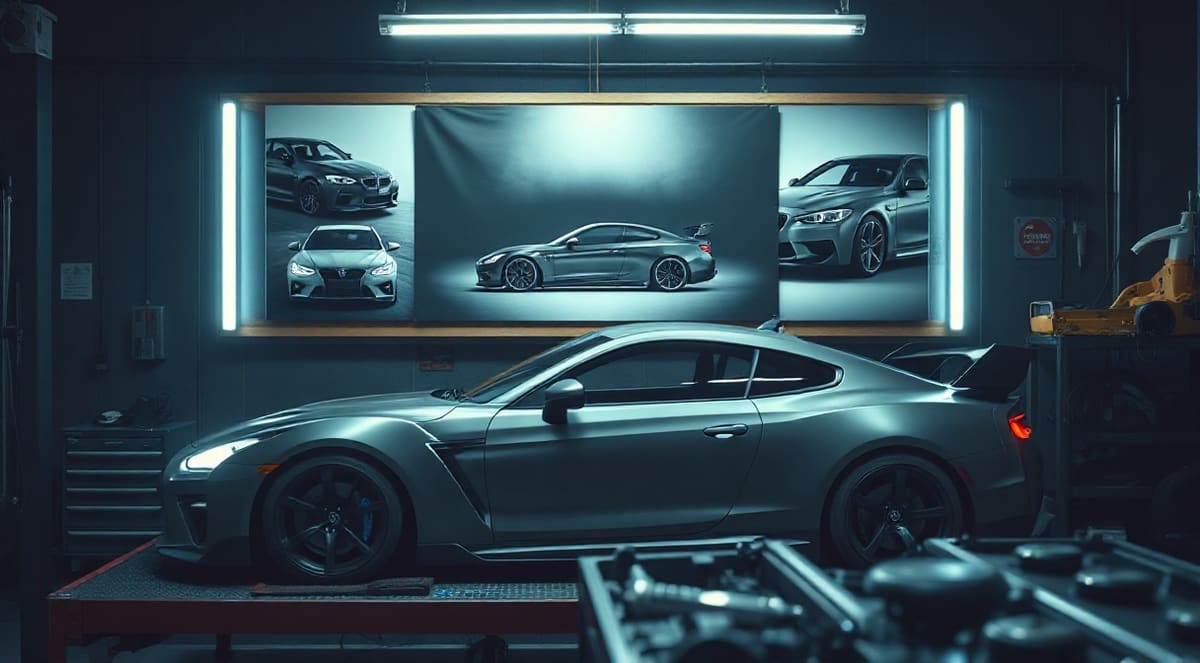
A successful car build follows a simple sequence: define the end vision first, set a total budget with a 20% buffer, then buy in the order that avoids rework — stance and wheels together, body and color next, details last. Most abandoned or regretted builds fail at step one: parts were bought impulsively with no picture of the finished car.
The difference between a "build" and a pile of receipts is that a build was planned backwards from a destination. Here's the process, layer by layer.
What should you decide before buying anything?
Two things: the vision and the number.
The vision. "Clean OEM+," "aggressive street," "full show car" — pick one identity, because parts that are great individually often clash across styles. The strongest builds are coherent, not maximal. Collect reference builds, but be careful: a look that works on someone else's car is a hypothesis, not a plan, until you've seen it on yours.
The number. Price the complete vision — parts, paint, labor, alignment, tires — then add 20% for the surprises that always come. If the total is out of reach, cut a layer from the plan rather than buying cheap versions of everything.
What's the correct order to buy and install mods?
The order that prevents buying anything twice:
- Baseline — service the car, fix what's broken. Mods on a tired car disappoint.
- Suspension and wheels together — offset, tire size and ride height are one interlocking decision; choosing them separately is the classic double-purchase (our lowering guide and wheel guide cover each half).
- Body work — kits, splitters, spoilers. If a widebody is in the plan, it moves before wheels, because arch width changes wheel specs.
- Color — wrap or paint after body parts exist, so everything is finished in one shot.
- Details — exhaust tips, tints, badges, interior.
Deviating usually costs money: paint before body kit means painting twice; wheels before widebody means wrong offsets.
How do you preview the build before spending?
This is where planning has genuinely changed in the last few years. Instead of imagining how the layers combine, you can render them — in order, on your actual car.
ModDrip's chained editing ("Keep Editing") mirrors the build sequence exactly: upload a well-lit 3/4 front photo, apply wheels, and that result becomes the base for the next edit — add stance, then a body kit, then a wrap color, each layer stacking on the last, with the car's body, angle and background preserved throughout. The thumbnail history lets you branch from any step, so you can take the wheels-plus-stance state and try three different colors from that same point without starting over. Each generation takes about 15-30 seconds; a full virtual build is an evening, not a season.
Two honest caveats. First, a render settles the aesthetic plan — fitment, offsets and part availability still need confirming with manufacturers before money moves. Second, expect the preview to change your plan; that's the point. Discovering that slammed doesn't suit your car costs one credit instead of a coilover set.
How do you keep a multi-month build on track?
- Write the plan down — layers, parts, prices, order — and treat it as the contract with yourself.
- Save toward layers, not parts; buy a complete layer at once so the car never sits half-done.
- Photograph every stage; progress content keeps motivation (and your Instagram feed) alive.
- Revisit the rendered end-state when tempted by an off-plan part. If it's not in the picture, it's not in the build.
A free ModDrip account includes 5 credits at signup — enough to rough out a first vision; the monthly plan's 75 credits comfortably cover iterating a full build in HD.
How much should a first full build cost?
A coherent street build — quality wheels, suspension, wrap or partial styling — typically lands between $5,000 and $15,000 including labor. The bigger determinant isn't the total; it's whether the money followed a plan or a series of impulses.
Should I plan the whole build even if I can only afford stage one?
Yes — especially then. The plan is what makes stage one compatible with stage three, so nothing gets replaced later. A rendered end-state also makes the slow phases easier to push through.
Can I try different build directions on the same car photo?
Yes. ModDrip's thumbnail history lets you branch from any previous step, so one base photo can hold an OEM+ direction and an aggressive direction side by side before you commit to either.
Written by the ModDrip team. Last updated August 2026.